
Compare
SOAX vs Webshare
Compare SOAX and Webshare. SOAX is built for teams whose products run on public web data at scale, and offers mobile proxies alongside residential proxies.

SOAX
SOAX is built for teams whose products run on public web data at scale. It sells residential and mobile proxies in one plan, at one rate per GB, and owns 100% of its proxy supply. Teams control traffic through an API and a dashboard. Good for:
Web scraping
Ad verification
Data for AI
SEO monitoring
Price monitoring
Webshare
Webshare sells datacenter, static residential (ISP) and rotating residential proxies. Customers pick a plan and set up proxies themselves using a dashboard, an API and a Chrome extension. Good for:
Ecommerce
Social media
SEO
Market research
Proxy infrastructure comparison
SOAX vs. Webshare:
In-depth comparison
Explore the key differences across leading proxy services, from core features and network coverage to performance and flexibility.
From signup to first request in minutes
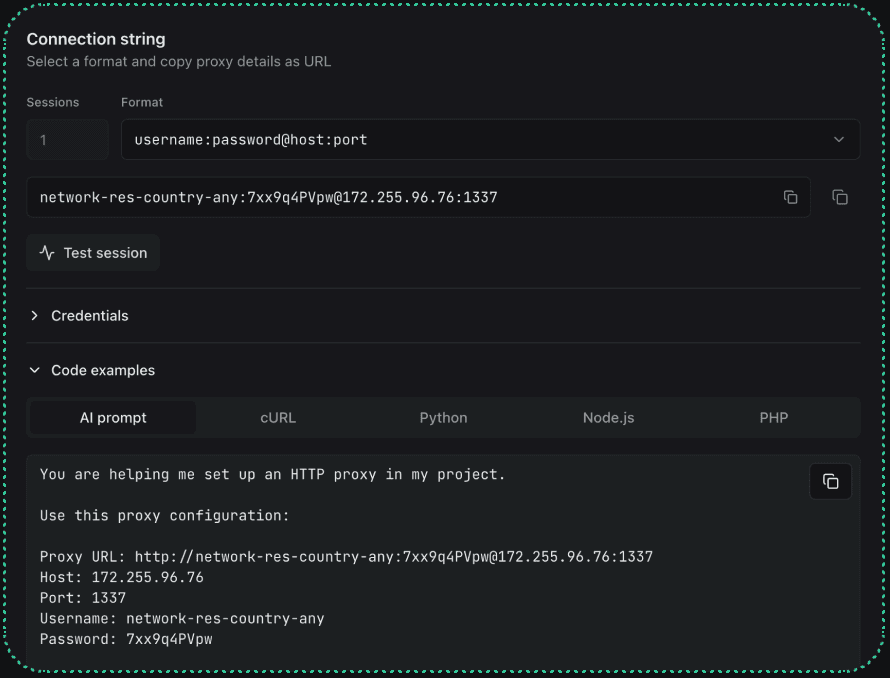
Pick a format, copy your connection string and paste it into your code or your AI assistant. You don’t have to wait on support tickets or book an onboarding call to get going.
- Our residential proxy network is built for teams who need large amounts of web data.
- Keep the same IP through multiple requests, or rotate on every request.
- Decide where your traffic comes from. Target by country, region, city, ISP, or ASN
Not all proxy infrastructure is equal
Traditional proxy network
Separate endpoint per proxy type
Static proxy lists
Round-robin or random rotation
Rotation patterns that stand out

Proxy mesh
One endpoint for all types
Dynamic, living network
Context-aware smart rotation
Behavior that blends in